We’ve been talking a lot lately about oak wilt. And for good reason—it kills thousands of trees across 76 Texas counties each year, sometimes within a few months. Does that mean it is a significant concern for Denton residents? No. Denton is not a high risk area. That said, there are a few tree care mistakes that can make even the healthiest oak trees more vulnerable to oak wilt and many other fungal diseases. This is especially true if you live on a property with a handful of trees with interconnected root systems.
The goal with any professional tree care plan is to set your trees up for a very long lifespan. We all know what we should be doing, but understanding what not to do can also play a major role in the longevity of your trees. Let’s explore this in today’s blog post.
Tree Care Mistakes You Need To Avoid
Pruning Oak Trees at the Wrong Time of Year — We all want our trees to look good year-round. And pruning is easily the best way to do that. By removing dead, diseased, hanging, or weak branches, you make your tree stronger. When you shape the tree properly and focus on clearing unnecessary overgrowth in the middle, you give it balance. That said, there is a time and place for everything. Pruning during the wrong season (between early spring and mid-summer) increases stress and keeps trees from healing properly before spring growth. It also heightens the risk of disease transmission (especially oak wilt).
Fresh pruning cuts during the wrong time of year create open wounds that attract sap-feeding beetles, particularly nitidulid beetles. These insects are active during specific times of the year, and if they visit an infected tree and then land on a healthy tree, they can transfer the disease from one tree to the next. If pruning is necessary during higher-risk periods, the wound should be sealed immediately to help reduce the chance of infection.
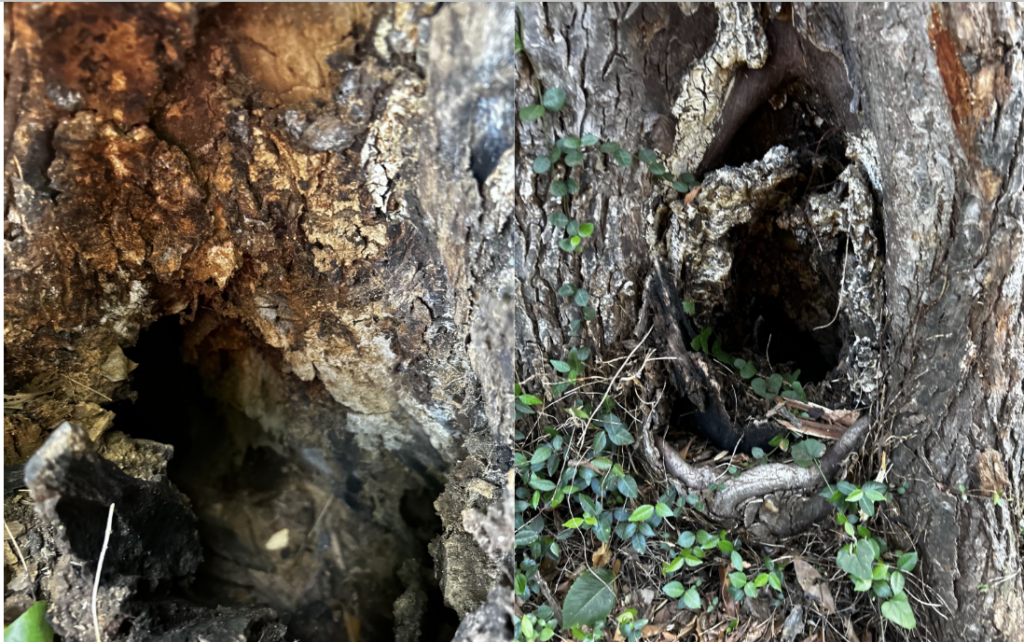
Leaving Tree Wounds Exposed — Most people think of storm damage and even accidental impact during yard work when talking about tree wounds. The reality is that each time you prune your tree, you’re creating a wound. The good news is that trees have a built-in protection system that helps them heal quickly. But that doesn’t mean you can’t do your part.
Any wound on an oak tree can serve as an entry point for insects and fungi, such as oak wilt. So, the best solution is to 1) prune during the right time of year, and 2) cover or treat wounds as soon as possible.
Ignoring Early Warning Signs of Oak Wilt — What makes oak wilt so destructive is that it is a vascular disease. Much like blood vessels in the human body seamlessly move blood and oxygen throughout our bodies, a tree’s internal plumbing moves water and nutrients from the roots underground up to the leaves and through the canopy at the very top. When a tree has oak wilt, this seamless system becomes clogged from the inside and can manifest in many ways above ground. Many homeowners assume leaf discoloration or branch dieback is due to drought or seasonal changes. However, these symptoms may also indicate the early stages of oak wilt.
Furthermore, ignoring these symptoms can allow the disease to spread to nearby oaks before action is taken. Here are a few symptoms to watch for. If you are still unsure if it’s an oak wilt problem, contact an arborist.
- Leaf discoloration (yellowing or bronzing)
- Wilting, starting at the top of the tree
- Leaf drop during the growing season
- Brown or black leaf veins
- Thinning canopy
- Sudden limb death
- Fungal mats under bark
- Brown streaks on the inner sapwood
Are you concerned about the health of your trees? Call Clean Edge Tree Services in Denton. Our arborists are trained to handle all tree service needs, including tree removal. Call us at 940-783-7023 or complete our online form.
Not Removing Infected Trees Promptly — This is a big one. If you allow a tree that’s infected with oak wilt to stick around, you are opening the door to have your other trees suffer the same fate. How? If you live in a heavily wooded area with plenty of oak trees growing close together, it is very easy for their roots to fuse underground naturally. Typically, the disease starts with one tree, then spreads through shared roots. The next thing you know, you’re dealing with devastating, widespread losses.
When it comes to tree care, your best bet is to remove the diseased tree immediately. Do nothing, or do too little, and it will continue spreading underground for years to come.
Damaging Tree Roots During Construction or Landscaping — As previously stated, trees often grow in interconnected root systems, especially species such as live oaks. Because of this, oak wilt can spread underground from one infected tree to others through root connections. Even if oak wilt isn’t a major concern right now, construction projects, trenching, or heavy landscaping near oak trees can damage roots and create additional stress that makes trees more vulnerable to infection.
In some cases, root damage can also accelerate the spread of the disease through an area. Before starting major landscaping or construction near mature oaks, it’s wise to consult a tree care professional.
More About Oak Wilt
In many forestry and arboriculture circles, oak wilt is consistently ranked in the top tier—often within the Top 3—of the most destructive tree diseases, depending on how “deadliest” is defined. It’s right up there with Dutch Elm Disease, Chestnut Blight, Thousand Cankers disease, and Beech Bark disease. Oak wilt impacts all trees differently, but red oaks are by far the most susceptible.
If caught too late, the only solution is tree removal.
Homeowners in Denton and surrounding North Texas communities should have their oak trees inspected if they notice signs of disease or decline. If you suspect oak wilt is harming your trees, do not wait or pass it off as a minor disease. Consulting an arborist early can mean the difference between losing one tree and losing many. Our arborists are trained to diagnose oak wilt, recommend treatment or containment options (including tree removal), and develop a long-term oak management plan.
Call Clean Edge Tree Service & Removal in Denton Today!!
When you search “tree service near me” or “tree service Denton” for your residential and commercial tree service needs, Clean Edge Tree Service & Removal in Denton, TX, should be your first call every time. We are family-owned and operated, and our arborists have proudly served Denton and the surrounding areas for many years. We have the equipment, experience, and technical know-how to safely and efficiently handle any tree scenario—from a downed tree in the middle of a storm to trimming a few branches, stump grinding, and removing trees that tower 83 feet in the air.
More importantly, we are licensed and insured. We pride ourselves on completing every job safely, efficiently, and with the cleanest edge you’ve ever seen. That said, tree work is a dangerous profession. Accidents can happen to the best of us, and without warning. If and when it does, you want the peace of mind knowing you won’t be left picking up the pieces.
We know you have options when it comes to your tree service and removal needs. There isn’t a tree in Denton that we can’t handle.
Call Clean Edge Tree Service & Removal today!